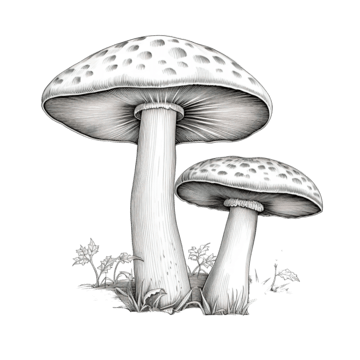
A couple of days back, near Jenner, in northern California, I had an excuse to wander deep into the forest. It was just after a few days of rain, and the entire forest floor was covered by a filament of moss: it spread over the belly of the forest, in which rotten ferns and decomposed fungi melded into a loamy mush, and over the crusty tree barks with crevices of old age – as my underfoot trod along the undulating forest floor, the entire forest laid still in emerald, and the drifting spores amid sunlight were the only telltale signs of the flowing time.
Agaricus campestris, or mushroom, was why I came. Each mushroom has a corresponding Latin title, to a point which the long string of syllables mycologists produced felt like jibber-jabbers used to tease the nonprofessionals, or a spell of intoxication cast upon muggles in the woods like myself. Yes, it was my first time foraging wild mushrooms. I barged into the forest’s stillness in near drunken steps, wrecking all sorts of branches and twigs (whose names I do not know), my hair an unselecting catcher of any unfortunate insect, dangling lichens, or freshly ruined spider webs, in the hope to find any shaded and soggy spot, where a mushroom could have spored. It did look like some mushrooms had already decided to put out their umbrellas against this winter’s rain.
My first ever forage was a lone sentinel against a fallen bark. It stood watch of the woods in a scarlet cap, and its long neck emerged upright from the ground – a bright contrast from its surroundings. I bent down: my left hand was supporting my body against the bark, and I felt the velvety teeth of moss curling under my left palm (and the rain-soaked tree began to crumble under my weight); my right hand’s fingertips were gliding down its cool stem till my nails started biting into the soil, and finally, my fingers gripped around the end of its stem, with lightness and ease, it popped into my palm. Its body was still moist with dews, and its white-milk stem and gills carried sprinkles of the ebony earth. Surprisingly heavy (probably from all the rain it gathered) for something I assumed to be fibers wrapping the hollows of air.
They say that, to know some things, to really know something, requires engagements from multiple senses. In the case of knowing a mushroom, apparently visual and tactile familiarities were not quite enough. I would need to smell and taste it as well. It smelled like an average mushroom, or to paraphrase, like dampened, musty wood with an unknown fragrance (call it umami then). Are you sure this is not poisonous, I gave the accompanying mycologist an unsure look before I was ready to dig into my dubious delicacy. With a knowing (which later turned out to be equally mischievous) smile and nod, I nibbled on the edge of the scarlet dome, chewed the spongy core up and down a few times, thought not much taste to it, spat it out, then waited for any lingering flavor to catch up on my tongue. I will never forget that Russula Emetica, commonly known as the sickener, whose aftertaste felt like caged cats on fire desperately trying to claw their way out of my mouth, was the first mushroom I got to know in the wild.
 Stranger Under My Skin